skip to main |
skip to sidebar
 Introduction
Annette M. Holba/Kylo-Patrick R. Hart
Part I: Reexamining End of the World
The Day After the End of the World: Media Coverage of a Nonevent
Terri Toles Patkin
Part II: Media and the Apocalypse
Apocalypticism in American Folk Music
Gary Baines
Empty All Along: Eraserhead, Apocalypse, and Dismantled Masculine Privilege
Jason T. Clemence
How to Save the Unsaved World?: Transforming the Self in The Matrix, The Terminator, and 12 Monkeys
Jörn Ahrens
Diversity, The Doom Generation, and the Apocalypse
Kylo-Patrick R. Hart
Occultic Rhetoric in the Buffyverse: Apocalypse Revisited
Annette M. Holba
The Pleasure of Sadism: A Reading of the Left Behind Series
Christian Lundberg
Apocalypse Documented: An Audiovisual Representation of September 11, 2001
Mark J. Porrovecchio
Exploring Science as Salvation in Apocalyptic Films
Brent Yergensen
Apocalypto Now: A New Millennial Pax Americana in Crisis?
Terence McSweeney
Part III: The Future of the End of the World
Futuralness as Freedom: Moving toward the Past that Will-Have-Been.
Corey Anton
 Where lives the thought that you didn't know you knew?
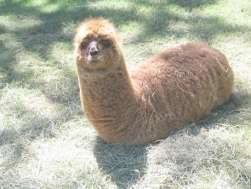
You cannot say what is independent of language. There may well be much that is other than language, what Wittgenstein called, the forever unspeakable only showable. But without language you'd be so tethered to the immediate present in an immediate now. As one example, note that Nietzsche writes,
Observe the herd as it grazes past you: it cannot distinguish yesterday from today, leaps about, eats, sleeps, digests, leaps some more, and carries on like this from morning to night and from day to day, tethered by the short leash of its pleasures and displeasures to the stake of the moment, and thus it is neither melancholy nor bored. It is hard on the human being to observe this, because he boasts about the superiority of his humanity over animals and yet looks enviously upon their happiness—for the one and only thing that he desires is to live like an animal, neither bored nor in pain, and yet he desires this in vain, because he does not desire it in the same way as does the animal. The human being might ask the animal: ‘Why do you just look at me like that instead of telling me about your happiness?’ The animal wanted to answer, ‘Because I always immediately forget what I wanted to say’—but it had already forgotten this answer and hence said nothing, so that the human being was left to wonder.' (
Unfashionable Observations, 1995, p. 87)
 Korzybski and Bateson
Alfred Korzybski maintained that training in "consciousness of abstracting" would lead people beyond the paradoxes of abstraction. Gregory Bateson, on the other hand, argued for the inability to achieve this thoroughly.
Bateson concluded: "It seems to be a universal feature of human perception…that the perceiver shall perceive only the product of his perceiving act. He shall not perceive the means by which that product was created." (Bateson, 1977, p.238)
On The Three Arm Despot
Did you know that one of the most tyrannical inventions in Western history isn’t but 150 years old? What am I talking about? That elusive little slice called “the minute” and its stepchild “the second.” Seriously, the minute and the second are highly modern inventions, things unknown throughout the vast majority of human history. In a word, modern folks have been more and more subject to the minute and the second, and have been more and more tightly scheduled and synchronized than most people who have lived on the planet. Anyone who wants to understand the impetus to the ultra-modern “digital age” might therefore begin by considering the invention of the “three-armed despot.”

Words Defy the Confines of Space and Time
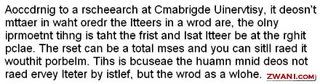
Words are words only because humans are able to equate the unequal. Now, if we equate the unequal, are the things equal or not?So, if mathematics is sometimes said to locate and deal with similarities between differences and with differences between similarities, where, then, is any number?
 And through Burke The Lord spoke to Satan: "And in any case, you will agree that, even if their ideas of divine perfection were reducible to little more than a language-using animals' ultimate perception of its own linguistic forms, this could be a true inkling of the divine insofar as language itself happened to be made in the image of divinity." (The Rhetoric of Religion, 1970, p. 289-299).
Maurice Merleau-Ponty: "If we were to make completely explicit the architectonics of the human body, its ontological framework, and how it sees itself and hears itself, we would see that the structure of its mute world is such that all the possibilities of language are already given in it."(The Visible and the Invisible, Trans. A. Lingis. 1968, p. 155).
 The Space and Time of Word UsersErving Goffman, in his book Strategic Interaction, writes, "Of all the things of this world, information is the hardest to guard, because it can be stolen without removing it." Words are not simply in space and time; they are not things in our environments. They are environments that we, word users, always already find ourselves within.



 Posts

